

Most endurance athletes live a double life.
By day, they lead companies, manage teams, and navigate high-stakes boardrooms. By dawn, they log miles, track heart rate zones, dial in nutrition, and quietly hang finisher medals on their walls - keeping that entire operating system locked away on Strava.
According to 30X Ironman finisher, 11X Kona qualifier, and executive coach Patrick McCrann, keeping those two worlds separate is leaving massive competitive leverage on the table.
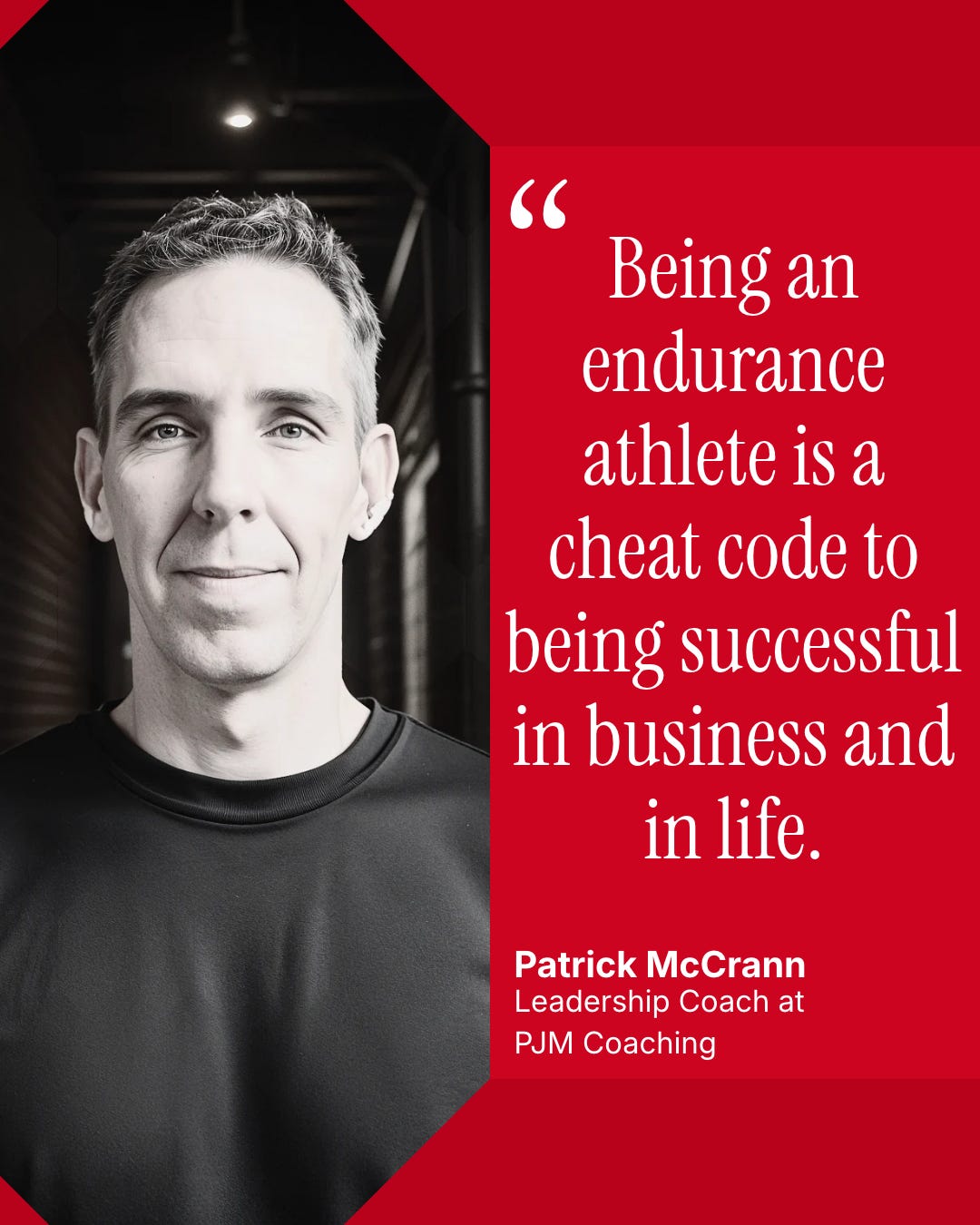
“Being an endurance athlete is a cheat code, um, to being successful in business and in life,” Patrick explains. “I’m talking about like the, the discipline, the process management, um, eliminating, um, the errors, the most unforced errors that we most commonly make, and most importantly, learning.”
Stop Chasing the Algorithm - Audit Your Own Delta
In 2004, when Patrick started coaching endurance athletes, training data was scarce. Today, algorithms flood our feeds with what Olympic champions ate three days before Kona. It’s entertaining, Patrick notes, but completely useless for your actual performance.
Whether you’re training for a sub-four-hour marathon or scaling a business past seven figures, growth comes down to closing your personal delta:
Define the exact target you want to hit.
Audit your own historical data (your workouts, your calendar, your energy).
Identify and eliminate the unforced errors that derailed your previous build.
Fitness isn’t built in the comfortable first half of a long ride - it’s built in the final 20% when fatigue sets in. If your fueling or pacing breaks down early, you never reach the adaptation zone. In business, if your calendar is hijacked by reactive busywork before 11:00 AM, you never reach the deep strategic work that moves the needle.
Why Perfection Kills Momentum: The 66% Rule
One of the biggest traps high-achieving founders and executives fall into is trying to engineer perfection before taking action - whether stalling on fundraising pitches to tweak slide decks or over-scripting every detail of a launch.
Patrick compares it to the triathlete obsessed with hitting a 5-minute, 17-second transition split who trips over a log staring at their watch.
“When we think about getting something done, we often go to 100% or 110%, but really you only need to get to about 60%, 66%, two-thirds. The rest of it with your pitch, which is not finished, but it’s good enough to ship, that last third is gonna be filled in by the act of doing the work, by the act of talking to other people, by actually doing the pitching.”
When you present a 100% finished monument to your team, you rob them of ownership. Leaving room for others to “color in” builds buy-in - and getting more real-world “at-bats” teaches you what no solo brainstorming session ever could.
Reframe the Headwind
On an Ironman bike course, when a brutal headwind kicks up, you don’t scream at the sky and quit cycling forever. You drop into your aero bars, check your power, and manage what is within your control.
Yet in the workplace, unexpected friction - a difficult client, a shifting market, a tough colleague - often causes leaders to take things personally and stall out.
Next time resistance hits at work, ask yourself Patrick’s frame-reset question: “What if this was a triathlon and not my day at work? How would I handle this differently?”