

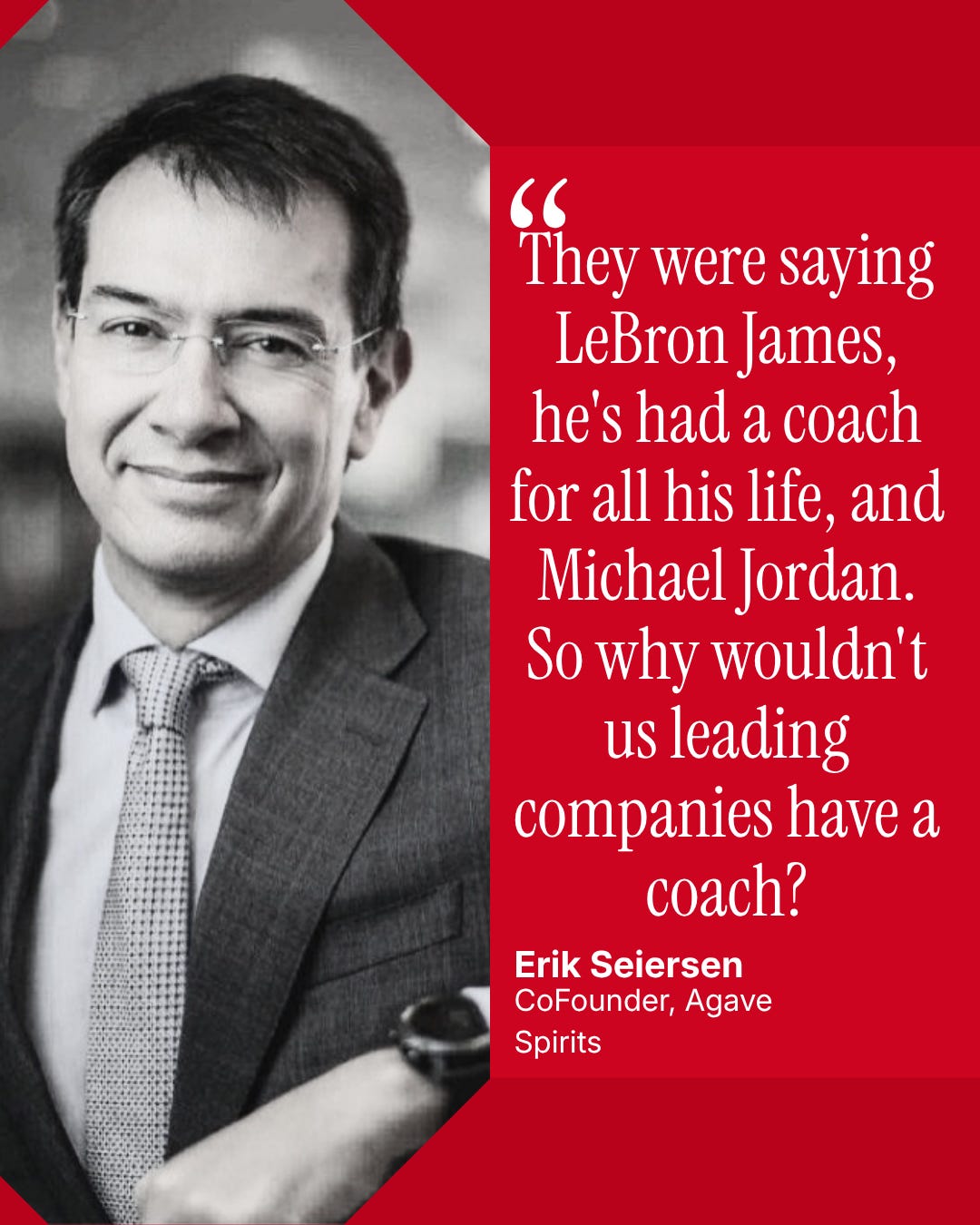
For decades, Erik Seiersen believed that being an exceptional executive meant being everywhere at once.
As a rising financial and commercial executive across global giants like Diageo, Allied Domecq, and Cadbury, Erik worked 16-hour days. He drove for perfection, solved every operational roadblock himself, and operated with a hammer looking for nails. He delivered numbers, but he also carried the hallmark blind spots of a hard-charging leader: impatience, a reluctance to fully trust his team, and an instinct to carry the entire company on his own shoulders.
Then, approaching his 50th birthday, Erik did something that felt borderline reckless.
He announced that he was going to run South Africa’s legendary Comrades Marathon - an 90-kilometer mountain ultramarathon - despite having undergone two leg surgeries and not having trained seriously in over a decade.
When peers scoffed, Erik made it public. He gathered his young leadership cohort at Diageo and laid down a challenge:
“We’re gonna break record shares and break the results of we’ve had for the last few years, and we’re gonna have the best year possible, and I trust you guys, and I promise you, if you deliver that, I will deliver Comrades.”
The Mutual Accountability Contract
What started as a personal endurance challenge transformed into an organizational breakthrough.
To train for a 90km race while running a billion-dollar enterprise, Erik physically could not work 16 hours a day anymore. He had to log his miles. He had to step back. He had to hand over operational ownership to his team and trust them to execute.
The result was stunning. Erik completed Comrades in Durban. From the finish line, he sent a video message back to his team in Mexico: “Guys, I’ve delivered, so you have 26 days to deliver the record results.”
They delivered the best year in the company’s history. But more importantly, Erik’s leadership Net Promoter Score - which had hovered around the company average of 30% - shot up to an unprecedented 91%.
“It was like, oh my God, I’m a better leader by creating more balance and more space for the people to shine,” Erik reflects. “This is not really about me, it’s about the team. It was effective when I was solving everything, but it was much more effective when I said, ‘These guys have to learn. They have to grow. They’ll make mistakes.’ You’re there to set the strategy and make clear decisions, but then really just let them fly.”
Crisis Leadership and the “Voluntary” Pivot
That hard-won endurance mindset was put to the ultimate test in early 2020. Having stepped into the CEO role of a highly leveraged $200M Mexican healthcare services company, the entire world shut down within months of his arrival. As hospitals converted exclusively to COVID facilities, procedural volume cratered from 800,000 operations to barely 100,000.
Facing imminent Chapter 11 bankruptcy, Erik refused to execute blunt, demoralizing layoffs in a family-owned business culture.
Instead, he leveraged his finance background to design a tax-advantaged voluntary early retirement and restructuring program. He pledged to the board and ownership that nobody would be fired involuntarily. By October, 99% of the targeted 30% staff reduction was achieved voluntarily, preserving employee dignity, providing severance packages for workers to launch their own businesses, and lifting the firm to a #10 ranking on Mexico’s Great Place to Work list.
The Universal Rule: Even the Best Need a Coach
Throughout his career - from running the Mexico City Marathon illegally as a 16-year-old to conquering extreme races in Antarctica and the Arctic - Erik has lived by a simple compounding law: every day, get a little bit better.
In executive life, that progress requires checking your ego and seeking ruthless honesty.
“LeBron James has had a coach all his life, and Michael Jordan,” Erik notes. “So why wouldn’t us leading companies have a coach? Every time I have a big job, I call on the great people that have been surrounding me, and I say, ‘Can I borrow an hour a month and just bounce ideas and get feedback on how you see me?’ If you ask for the honest truth, you’ll get it, and that will help you avoid a major misstep.”